evolve - Master This Word
Master this word with our 5-step learning method – Learn English in English
Train English Through Brain Routes, Not Translation.
This page helps you stop memorizing isolated translations and start understanding a word through its shared mental image, native-style thinking, and practical training steps.
Master this word with our 5-step learning method – Learn English in English
Example sentences are the start of understanding. Don't rush to memorize. First feel how the word works in a sentence.
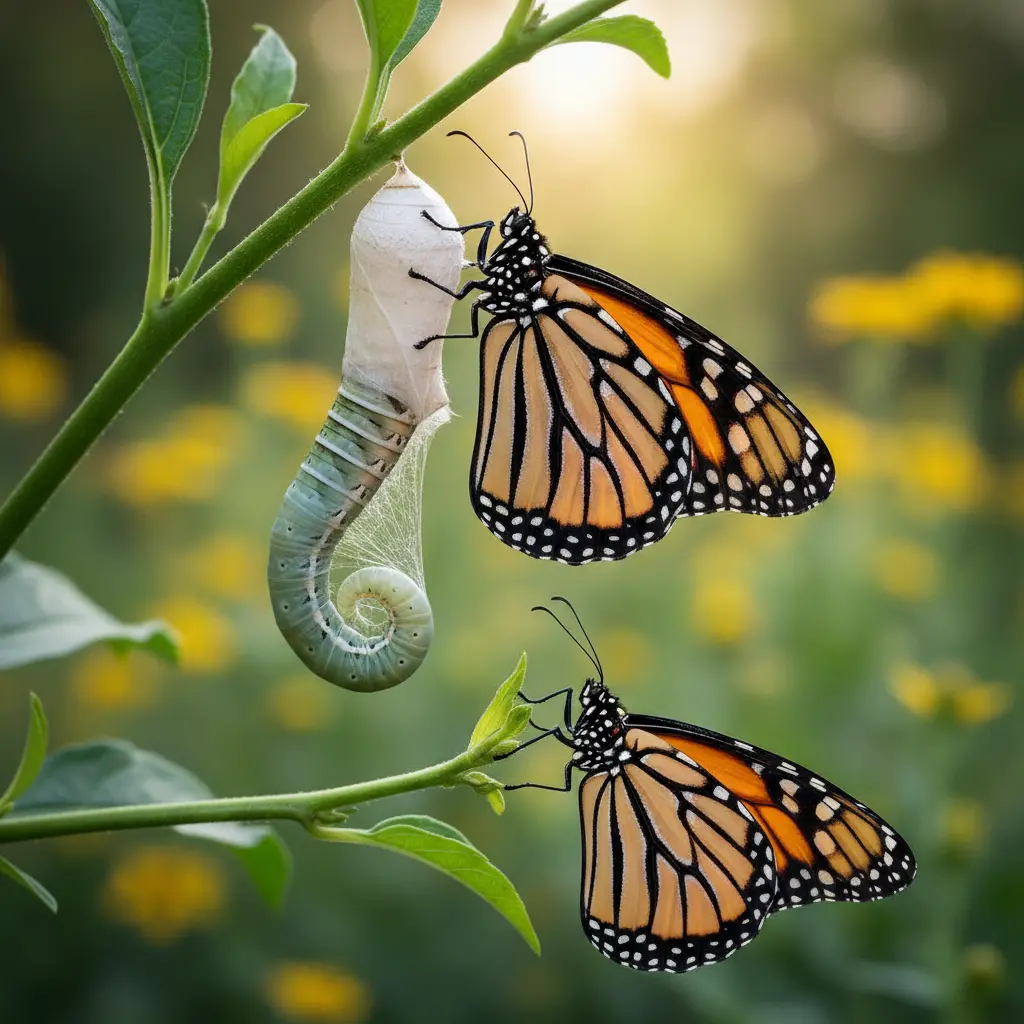
e- = out + volvere = to roll; Latin origin leading to Old French and then English. Imagine a caterpillar emerging from its cocoon, rolling out into the world as a butterfly.
Note 1: These definitions and etymologies are not standard dictionary definitions, but extended explanations provided to help with memorization and understanding of the actual application of words. Through this background information, we strive to make words more vivid and easier to understand, and help you remember their meanings in real life.
Note 2: LexiTalk designs the learning flow around the linguistics principle of “Comprehensible Input.” When learners encounter material that is slightly above their level but still understandable from context, the brain naturally absorbs the language. That’s why we keep every word inside authentic contexts, using examples and associations to help you understand it and use it flexibly.
Read the FAQ explanation of Comprehensible InputI set a seed in soil and adjust the light, starting a careful routine. I water it, move the pot a little, and keep checking daily, pushing the care forward. The sprout grows slowly, leaves turn toward the sun, and the pot feels alive with a new mood. Watching this, I feel myself letting the plant evolve, from small habits to a bigger change over time.
evolve means to develop gradually, or to change and transform over time, often through a long sequence of stages. In biology you might say a species evolves, but the word is used more broadly for ideas, technologies, relationships, and personal growth. The sense implies change that is gradual rather than abrupt, and that the outcome is a new form or state that follows from what came before. The origin is from Latin volvere 'to roll' with e- as a prefix, historically connected to Old French, and it captures the idea of rolling forward through development. Learners should be aware of collocations like evolve into, evolve from, or evolution as a related noun.
English speakers often view evolve as a broad, ongoing process with a neutral to positive drift; mistakes include using evolve for quick, one-step changes and confusing it with develop or progress.
What is the meaning of the word 'evolve'?
Which sentence below uses 'evolve' correctly?
Which word is most similar to 'evolve'?
What is the opposite of 'evolve'?
Can you think of a real-life scenario of 'evolve'?
English Learning Listening Content
Listen NowDownload LexiTalk app for personalized learning experience
Download AppCookies
We use cookies for essential site functions, analytics, and ads. You can accept, reject, or manage preferences. Privacy Policy