fantastic - Master This Word
Master this word with our 5-step learning method – Learn English in English
Train English Through Brain Routes, Not Translation.
This page helps you stop memorizing isolated translations and start understanding a word through its shared mental image, native-style thinking, and practical training steps.
Master this word with our 5-step learning method – Learn English in English
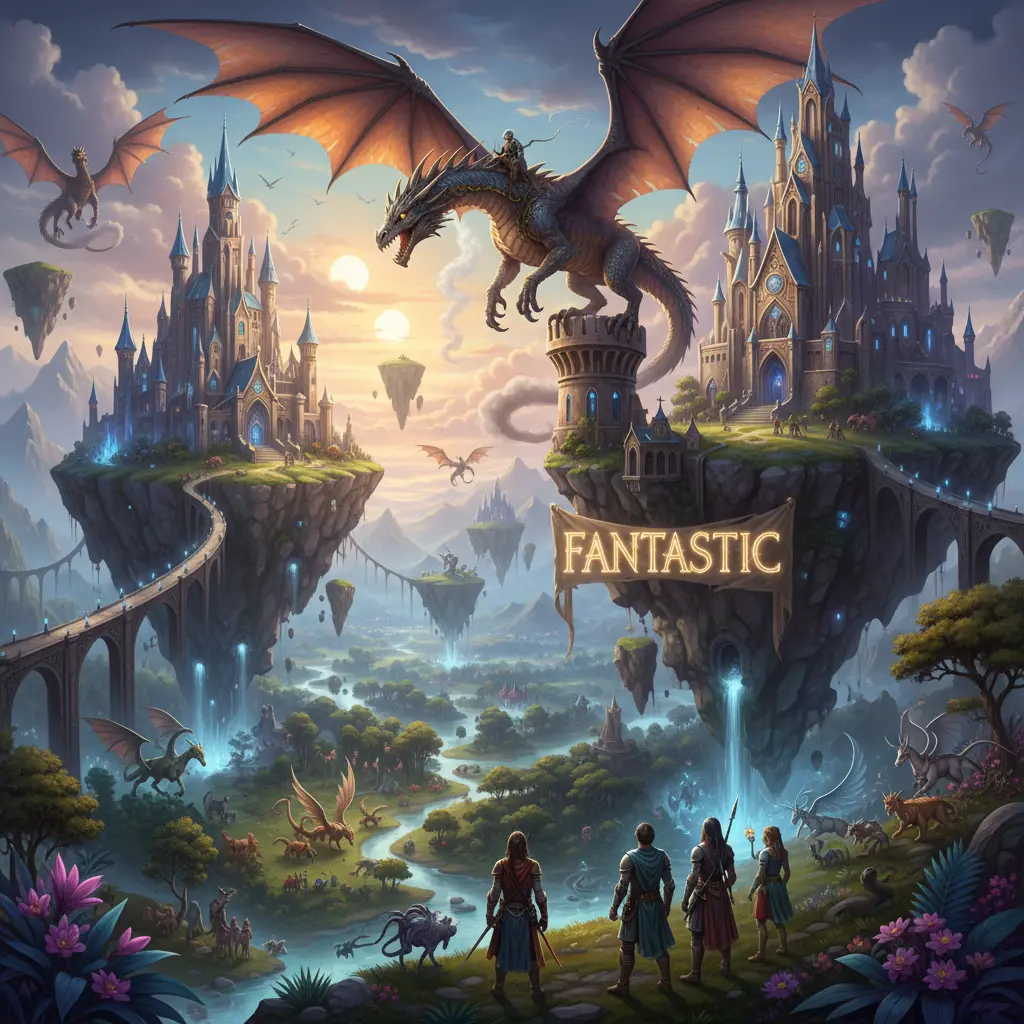
Example sentences are the start of understanding. Don't rush to memorize. First feel how the word works in a sentence.
fantastic = fan- (from 'fantasy') + -astic (suffix meaning 'related to'). Origin: Greek → Latin → Middle French → English. Picture a world of endless imagination, where dragons and castles come to life.
Note 1: These definitions and etymologies are not standard dictionary definitions, but extended explanations provided to help with memorization and understanding of the actual application of words. Through this background information, we strive to make words more vivid and easier to understand, and help you remember their meanings in real life.
Note 2: LexiTalk designs the learning flow around the linguistics principle of “Comprehensible Input.” When learners encounter material that is slightly above their level but still understandable from context, the brain naturally absorbs the language. That’s why we keep every word inside authentic contexts, using examples and associations to help you understand it and use it flexibly.
Read the FAQ explanation of Comprehensible InputI set my chin a little higher and move closer to the stage, hand hovering near the edge. The lights shift, the whole room seems to lean toward the sound. I push a breath out slowly, feeling a spark of effort as I keep my eyes fixed. In that rush, fantastic starts to feel real and dreamlike at once, something wonderful I can hold onto and carry into the moment ahead.
fantastic is a flexible English adjective that signals very high quality, striking impressiveness, or a sense of the unreal and imaginary when used in a descriptive context. In everyday speech it often emphasizes enthusiasm rather than precision, so speakers may overstate things that are merely good rather than excellent. It can also describe fantastic ideas or stories that seem almost magical, drawing on fantasy imagery. Learners should be careful not to replace more precise words like excellent, wonderful, or amazing in formal writing, and to choose a context that really supports the sense of something being beyond ordinary.
In English, fantastic often signals strong praise, sometimes beyond the literal quality of the thing. Learners tend to over-hype ordinary items or confuse fantasy with reality. Use precise adjectives in formal writing and reserve fantastic for genuine emotional emphasis or fantastical contexts.
In which sentence is 'fantastic' used correctly?
Which word is a synonym for 'fantastic'?
What is the opposite of 'fantastic'?
When would you describe a situation as 'fantastic'?
Download LexiTalk app for personalized learning experience
Download AppCookies
We use cookies for essential site functions, analytics, and ads. You can accept, reject, or manage preferences. Privacy Policy