formal - Master This Word
Master this word with our 5-step learning method – Learn English in English
Train English Through Brain Routes, Not Translation.
This page helps you stop memorizing isolated translations and start understanding a word through its shared mental image, native-style thinking, and practical training steps.
Master this word with our 5-step learning method – Learn English in English
Example sentences are the start of understanding. Don't rush to memorize. First feel how the word works in a sentence.
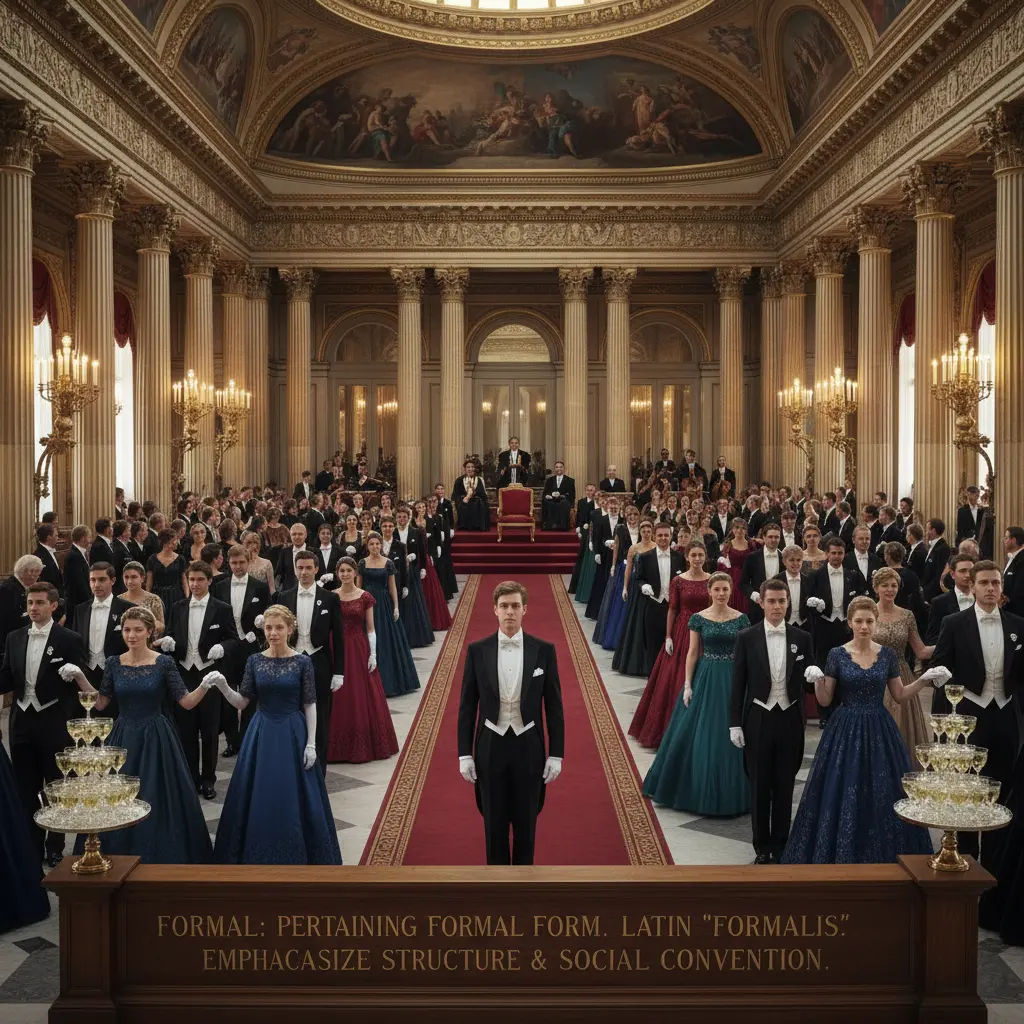
formal: form + -al (pertaining to). Latin 'formalis' (related to form); Old French; English. Imagine a grand ceremony where everyone wears elegant attire, emphasizing the importance of structure and social conventions.
Note 1: These definitions and etymologies are not standard dictionary definitions, but extended explanations provided to help with memorization and understanding of the actual application of words. Through this background information, we strive to make words more vivid and easier to understand, and help you remember their meanings in real life.
Note 2: LexiTalk designs the learning flow around the linguistics principle of “Comprehensible Input.” When learners encounter material that is slightly above their level but still understandable from context, the brain naturally absorbs the language. That’s why we keep every word inside authentic contexts, using examples and associations to help you understand it and use it flexibly.
Read the FAQ explanation of Comprehensible InputI straighten my collar and pull my sleeves, standing tall. I adjust my posture and set my pace as I step into a room where form and order guide every glance. The air feels quiet and official, so I hold back laughter, shift my tone, and keep my hands steady. By the moment, small moves reveal a sense of dignity, and the moment itself feels formal in the right way.
Formal describes things related to form, structure, or official rules. It is used for official documents, ceremonies, and attire, as well as in contexts where conventions and propriety are expected. In grammar, formal language avoids contractions and slang, aiming for precision and politeness. The root idea comes from form and order, distinguishing it from informal or casual usage. In polite settings you often encounter formal behavior, formal dress codes, and formal apologies. Understanding when to use formal language, formal titles, and formal procedures helps prevent social blunders. Note that formal does not always mean grand or ceremonial; it can simply mean according to established conventions or required by rules.
For English speakers, formal often signals respect, rules, and a distance from everyday speech. Learners often think formal equals overly stiff or ceremonial, and they may misapply it to casual situations or official-looking but simple notes.
What is the meaning of the word 'formal'?
In which of the following situations would you most likely wear formal attire?
Which word is similar to 'formal'?
What is the opposite of 'formal'?
When attending a wedding, it is common to dress in formal attire. What does this mean?
Download LexiTalk app for personalized learning experience
Download AppCookies
We use cookies for essential site functions, analytics, and ads. You can accept, reject, or manage preferences. Privacy Policy