
mesolithic - Master This Word
Master this word with our 5-step learning method – Learn English in English
Train English Through Brain Routes, Not Translation.
This page helps you stop memorizing isolated translations and start understanding a word through its shared mental image, native-style thinking, and practical training steps.
Master this word with our 5-step learning method – Learn English in English
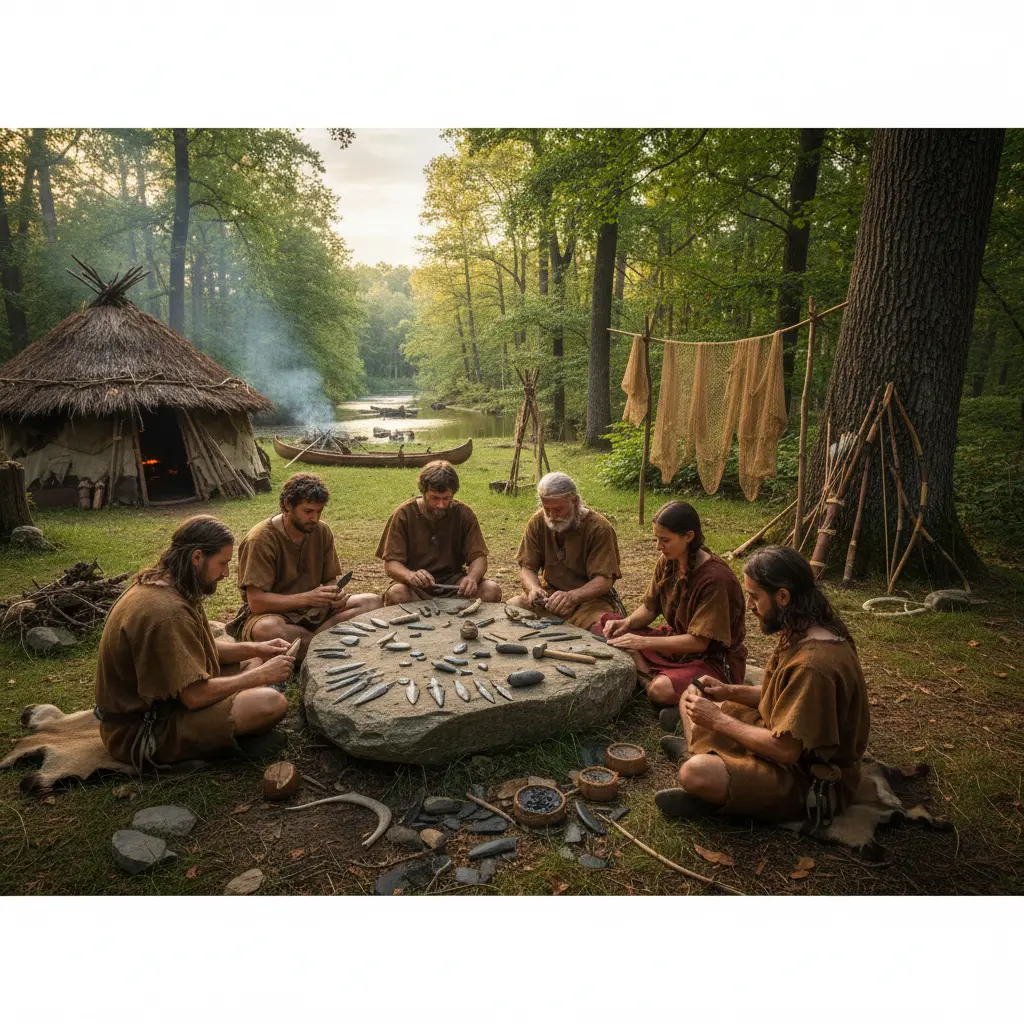
Example sentences are the start of understanding. Don't rush to memorize. First feel how the word works in a sentence.
meso- (middle) + lithic (stone) → from Greek 'mesos' and Latin 'lapis' → 'middle stone age'. Imagine ancient hunters crafting tools from stones, bridging the gap between the old ways and new innovations.
Note 1: These definitions and etymologies are not standard dictionary definitions, but extended explanations provided to help with memorization and understanding of the actual application of words. Through this background information, we strive to make words more vivid and easier to understand, and help you remember their meanings in real life.
Note 2: LexiTalk designs the learning flow around the linguistics principle of “Comprehensible Input.” When learners encounter material that is slightly above their level but still understandable from context, the brain naturally absorbs the language. That’s why we keep every word inside authentic contexts, using examples and associations to help you understand it and use it flexibly.
Read the FAQ explanation of Comprehensible InputMesolithic is an adjective used to describe the middle stage of the Stone Age, a period that lies between the Paleolithic and Neolithic. It covers a time when many human groups shifted from purely mobile hunter-gatherer lifestyles to more varied strategies that included fishing, foraging, and seasonal settlement. Toolkits often feature small, composite blades called microliths and new hafting techniques that increased tool versatility. The term itself comes from meso- (middle) and lithic (stone), literally 'middle stone age.' Understanding this word helps learners discuss archaeological cultures, environmental adaptation, and the slow technological transition that prepared the way for farming and settled life.
Explain to an English speaker: Mesolithic is a historical period name; it is capitalized when naming the era, and its meaning emphasizes the middle Stone Age and transitional technologies rather than a single culture.
What does 'mesolithic' mean?
Choose the sentence that uses 'mesolithic' correctly.
Which word is most similar to 'mesolithic'?
What is the opposite of 'mesolithic'?
Can you give an example of a real-life scenario related to 'mesolithic'?
Download LexiTalk app for personalized learning experience
Download AppCookies
We use cookies for essential site functions, analytics, and ads. You can accept, reject, or manage preferences. Privacy Policy