
ok - Master This Word
Master this word with our 5-step learning method – Learn English in English
Train English Through Brain Routes, Not Translation.
This page helps you stop memorizing isolated translations and start understanding a word through its shared mental image, native-style thinking, and practical training steps.
Master this word with our 5-step learning method – Learn English in English
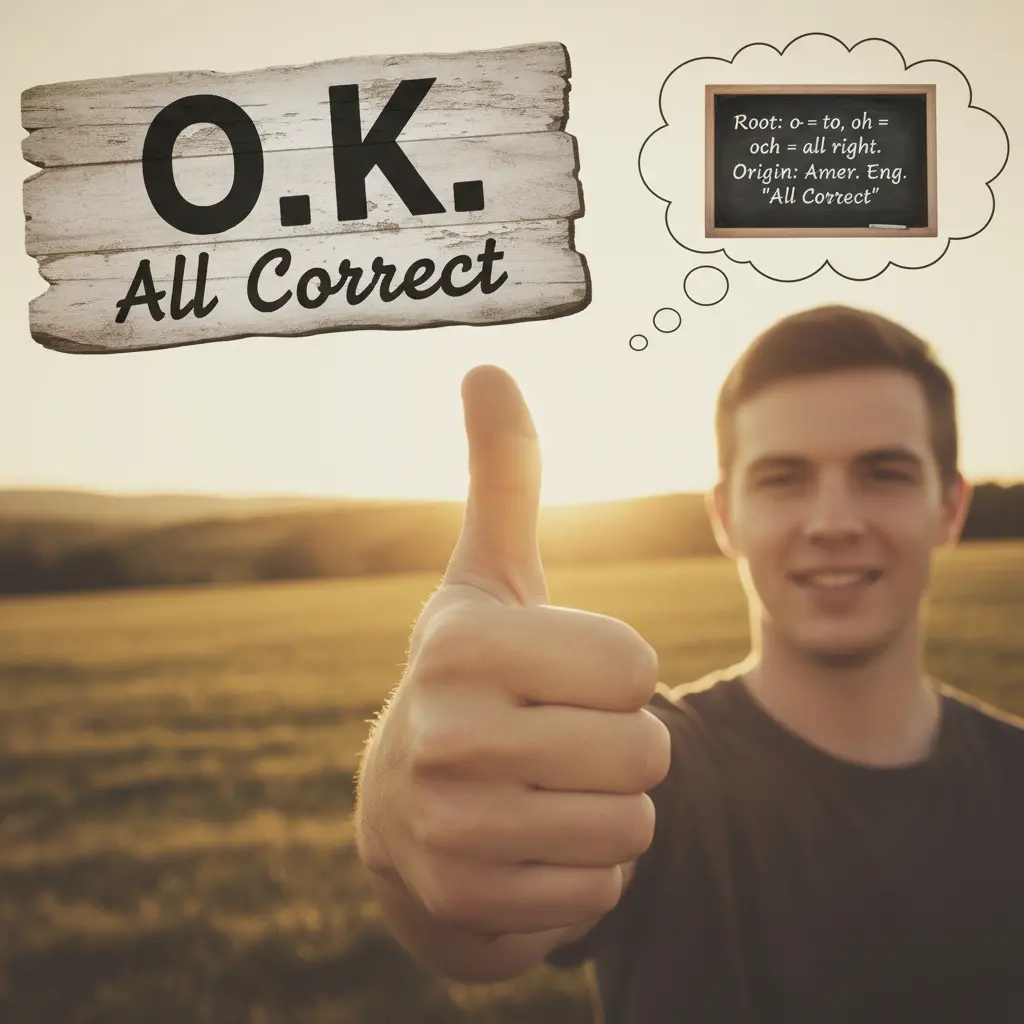
Example sentences are the start of understanding. Don't rush to memorize. First feel how the word works in a sentence.
Root: o- = to, and 'kay' or 'okay' from 'och' meaning 'all right.' Historical origin: American English, possibly from a misspelling of 'all correct.' Memory image: Picture giving a thumbs up, signaling everything is fine.
Note 1: These definitions and etymologies are not standard dictionary definitions, but extended explanations provided to help with memorization and understanding of the actual application of words. Through this background information, we strive to make words more vivid and easier to understand, and help you remember their meanings in real life.
Note 2: LexiTalk designs the learning flow around the linguistics principle of “Comprehensible Input.” When learners encounter material that is slightly above their level but still understandable from context, the brain naturally absorbs the language. That’s why we keep every word inside authentic contexts, using examples and associations to help you understand it and use it flexibly.
Read the FAQ explanation of Comprehensible InputI grip the door knob and turn, feeling the latch loosen in my hand. I push and pull just enough to sense the door yield and a tiny change in the air. I take a breath, nod to myself, and say ok, letting the plan settle in my mind. The moment feels like a simple yes that keeps me moving forward.
Ok is a small, flexible word in English that can work as an interjection or as an adjective meaning satisfactory, acceptable, or understood. It signals agreement, acknowledgment, or reassurance in casual conversation, and it can soften a directive or serve as a simple response. It appears in phrases like Ok that works or That sounds ok to me, indicating that the speaker grants permission or confirms readiness. Although often written as okay, ok is equally common in informal speech and digital chat. Learners should note tone: ok tends to be casual, while okay can carry a more neutral or slightly formal feel. The origin traces to earlier forms like all correct and och meaning all right.
Ok is a casual, flexible term in English that signals agreement or understanding without formal emphasis. Learners from languages with less explicit ways to acknowledge requests may overuse loud affirmatives or feel unsure when to reply with only ok. In many cultures, tone, facial expression, and situational context determine how strong or polite the agreement sounds.
Which sentence uses 'ok' correctly?
What is the most similar word to 'ok'?
What is the opposite of 'ok'?
Can you give an example of a real-life scenario of 'ok'?
Download LexiTalk app for personalized learning experience
Download AppCookies
We use cookies for essential site functions, analytics, and ads. You can accept, reject, or manage preferences. Privacy Policy