
quasars - Master This Word
Master this word with our 5-step learning method – Learn English in English
Train English Through Brain Routes, Not Translation.
This page helps you stop memorizing isolated translations and start understanding a word through its shared mental image, native-style thinking, and practical training steps.
Master this word with our 5-step learning method – Learn English in English
Example sentences are the start of understanding. Don't rush to memorize. First feel how the word works in a sentence.
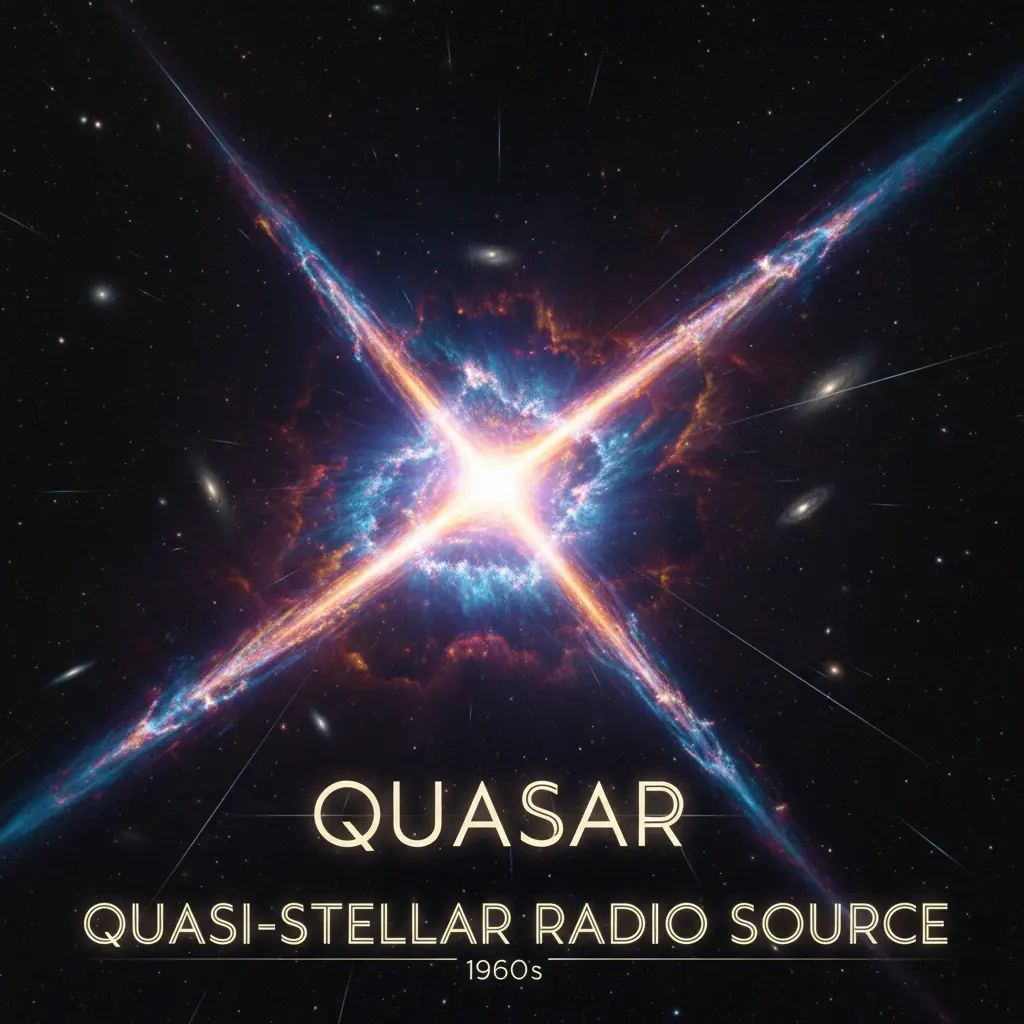
(a) 'quas' + 'ar' (a suffix for relating to), (b) Originating from the term 'quasi-stellar radio source' in 1960s science, (c) Imagine a brilliant star-like object that beams energy across the universe, like a cosmic lighthouse guiding us through the vastness of space.
Note 1: These definitions and etymologies are not standard dictionary definitions, but extended explanations provided to help with memorization and understanding of the actual application of words. Through this background information, we strive to make words more vivid and easier to understand, and help you remember their meanings in real life.
Note 2: LexiTalk designs the learning flow around the linguistics principle of “Comprehensible Input.” When learners encounter material that is slightly above their level but still understandable from context, the brain naturally absorbs the language. That’s why we keep every word inside authentic contexts, using examples and associations to help you understand it and use it flexibly.
Read the FAQ explanation of Comprehensible InputQuasar is a term used in astronomy for a distant, extremely luminous object powered by gas falling into a supermassive black hole at the center of a galaxy. The light we see from a quasar comes from material heated to extreme temperatures as it spirals inward, emitting across the electromagnetic spectrum and often outshining the entire host galaxy. Quasars were first identified in radio surveys because they appeared star-like, which gave rise to the name quasi-stellar radio source; the nickname stuck even after higher-resolution images revealed their true nature. In science writing and teaching, quasar can be discussed as a beacon from the early universe, illustrating how accretion and relativistic processes produce immense energy across vast cosmic distances.
Explain to an English speaker that quasar is a technical noun for a distant, energetic object, not a 'star' or a common object; emphasize the physics rather than sensational brightness.
Download LexiTalk app for personalized learning experience
Download AppCookies
We use cookies for essential site functions, analytics, and ads. You can accept, reject, or manage preferences. Privacy Policy