
skull - Master This Word
Master this word with our 5-step learning method – Learn English in English
Train English Through Brain Routes, Not Translation.
This page helps you stop memorizing isolated translations and start understanding a word through its shared mental image, native-style thinking, and practical training steps.
Master this word with our 5-step learning method – Learn English in English
Example sentences are the start of understanding. Don't rush to memorize. First feel how the word works in a sentence.
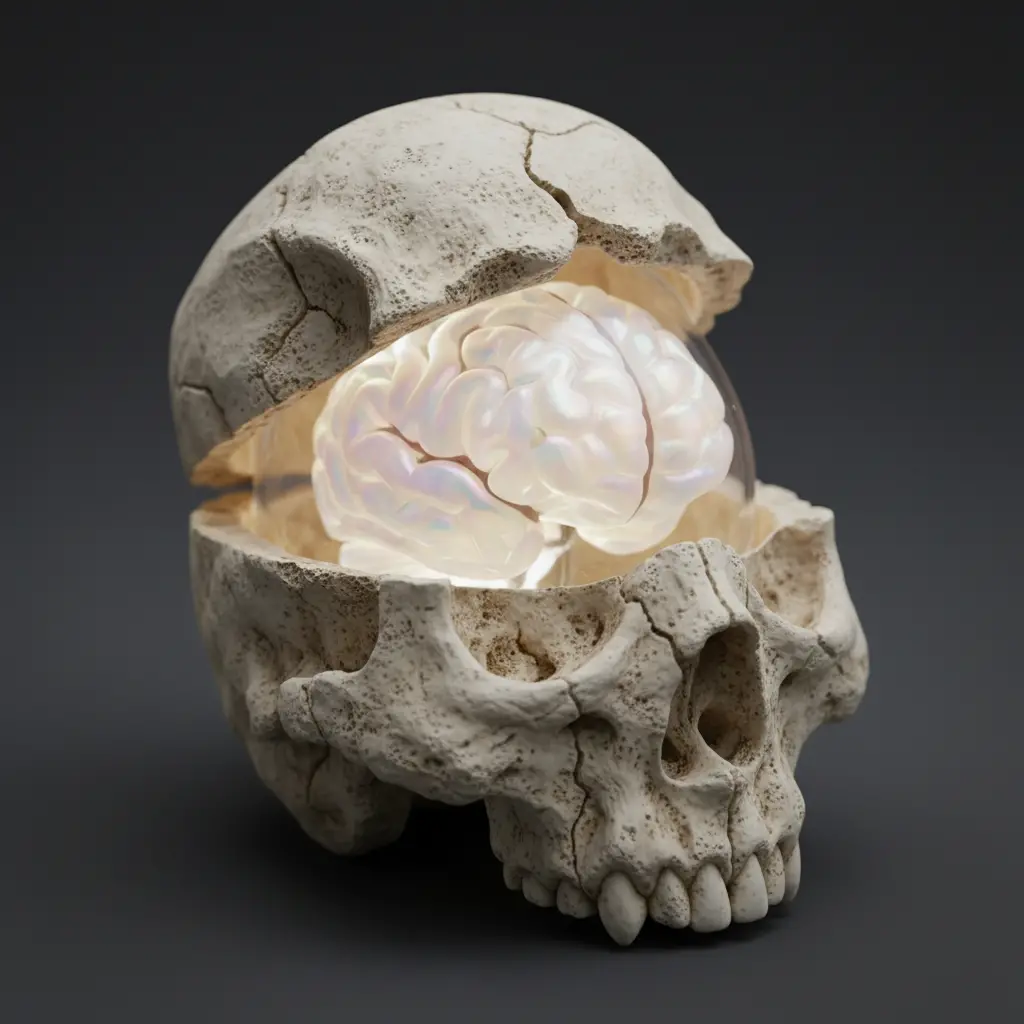
skull = 'skul' (Old English) + '-l' (diminutive suffix) → Old English 'scol', from Proto-Germanic 'skuldo' → English. Imagine a small bony container holding the brain, like a rugged shell protecting a delicate pearl inside.
Note 1: These definitions and etymologies are not standard dictionary definitions, but extended explanations provided to help with memorization and understanding of the actual application of words. Through this background information, we strive to make words more vivid and easier to understand, and help you remember their meanings in real life.
Note 2: LexiTalk designs the learning flow around the linguistics principle of “Comprehensible Input.” When learners encounter material that is slightly above their level but still understandable from context, the brain naturally absorbs the language. That’s why we keep every word inside authentic contexts, using examples and associations to help you understand it and use it flexibly.
Read the FAQ explanation of Comprehensible InputI hold a cool skull model in my hands and lift it a notch to feel its weight. I turn it slowly, adjust the tilt, and watch how the holes and lines align with my view. The effort makes my wrists remember my own head, and I keep the grip steady as if guiding a tiny, fragile compass. With this small move, the skull stops being just bone and starts showing me how a real head sits, moves, and protects the brain.
Skull refers to the bony structure that protects the brain inside the head. In anatomy, it may be discussed as the skull proper or as part of the cranial bones that surround the brain. In everyday usage, people might say 'the skull' when pointing to the head, especially in medical or educational contexts. For artists and students, understanding the skull helps in drawing faces with correct proportions and angles. The word also appears in phrases like 'skull and crossbones' as a symbol, and in medical imagery such as radiographs. Be mindful of the difference between skull and cranium in more formal terms.
Think of skull as the hard bone framework of the head rather than the whole head; English uses skull mainly for the bone, while head covers skin, hair, and face.
What is the meaning of 'skull'?
In which sentence is 'skull' used correctly?
Which word is a synonym of 'skull'?
Which scenario involves a 'skull'?
Can you think of a real-life situation where 'skull' is mentioned?
Download LexiTalk app for personalized learning experience
Download AppCookies
We use cookies for essential site functions, analytics, and ads. You can accept, reject, or manage preferences. Privacy Policy