spoiled - Master This Word
Master this word with our 5-step learning method – Learn English in English
Train English Through Brain Routes, Not Translation.
This page helps you stop memorizing isolated translations and start understanding a word through its shared mental image, native-style thinking, and practical training steps.
Master this word with our 5-step learning method – Learn English in English
Example sentences are the start of understanding. Don't rush to memorize. First feel how the word works in a sentence.
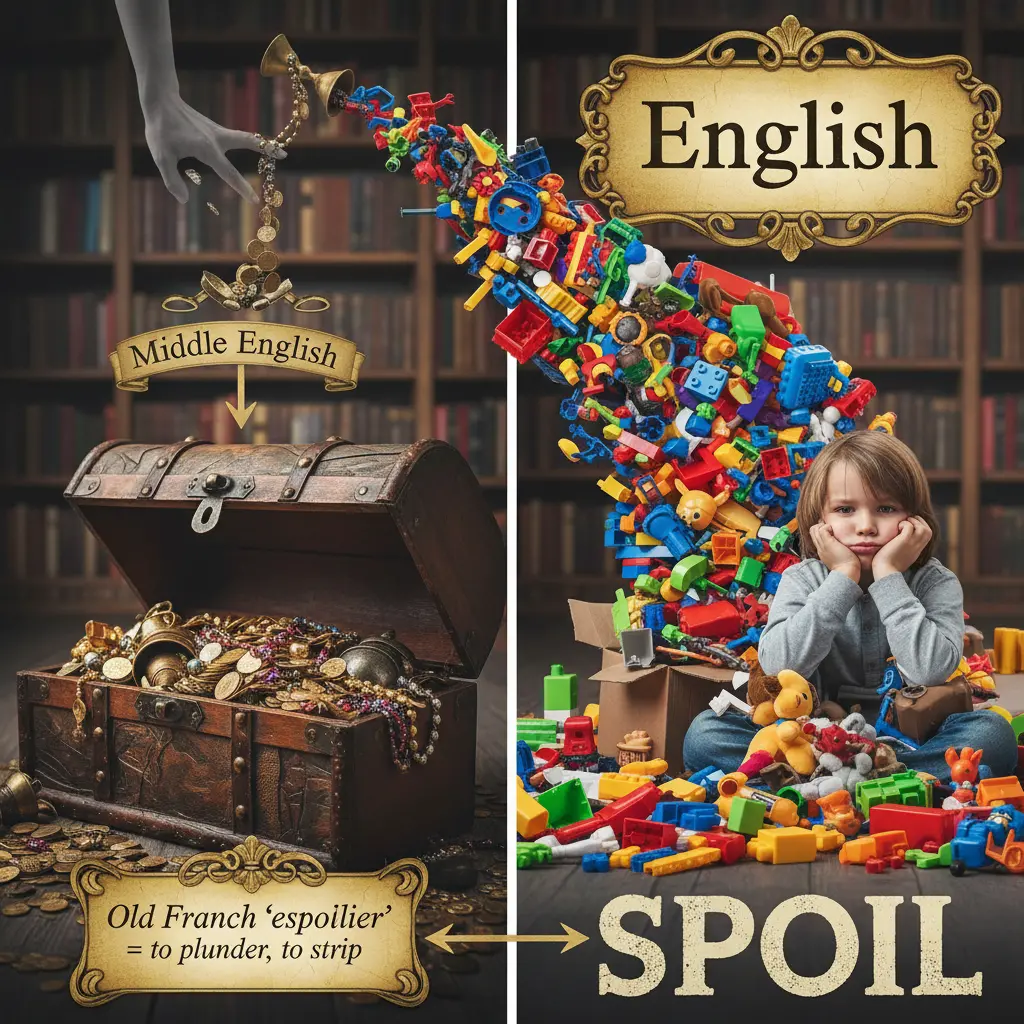
Root: spoil (from Middle English, from Old French 'espoillier' = to plunder, to strip). Historical Origin: Middle English → Old French → English. Memory Image: Imagine an untouched treasure that gets spoiled by careless handling or a spoiled child surrounded by too many toys, illustrating both the loss and excess.
Note 1: These definitions and etymologies are not standard dictionary definitions, but extended explanations provided to help with memorization and understanding of the actual application of words. Through this background information, we strive to make words more vivid and easier to understand, and help you remember their meanings in real life.
Note 2: LexiTalk designs the learning flow around the linguistics principle of “Comprehensible Input.” When learners encounter material that is slightly above their level but still understandable from context, the brain naturally absorbs the language. That’s why we keep every word inside authentic contexts, using examples and associations to help you understand it and use it flexibly.
Read the FAQ explanation of Comprehensible InputI grip the fridge handle and move the door aside, watching labels shift as I decide what to keep. I set a timer, close the lid, and adjust the heat, feeling the kitchen air change around me. A small push of effort can change the outcome: ignore it and something might spoil, tend it and it stays usable or becomes shareable. In the end, spoil shows up as a rhythm of care and consequence—how a moment of kindness or neglect can tilt what’s real, or let food slip toward badness.
Spoil is a versatile English verb with several related senses. Most commonly, it means to ruin or damage something—for example, you might spoil a surprise by telling someone beforehand, or spoil a project by cutting corners. It can also mean to treat someone with excessive kindness, which can backfire by making them dependent or weakening boundaries. A third common sense describes food that has gone bad or rotted, as in milk that spoils after sitting out too long. As a noun, 'spoil' can refer to rewards or plunder taken during conflict, or to the things that are broken or spoiled. The word comes from Middle English and Old French roots.
In English, spoil spans both negative (ruin) and positive (pamper) usage. Learners often mix the senses with related words like ruin, wreck, or pamper, and struggle with past tense forms (spoiled vs spoilt).
Download LexiTalk app for personalized learning experience
Download AppCookies
We use cookies for essential site functions, analytics, and ads. You can accept, reject, or manage preferences. Privacy Policy