terrain - Master This Word
Master this word with our 5-step learning method – Learn English in English
Train English Through Brain Routes, Not Translation.
This page helps you stop memorizing isolated translations and start understanding a word through its shared mental image, native-style thinking, and practical training steps.
Master this word with our 5-step learning method – Learn English in English
Example sentences are the start of understanding. Don't rush to memorize. First feel how the word works in a sentence.
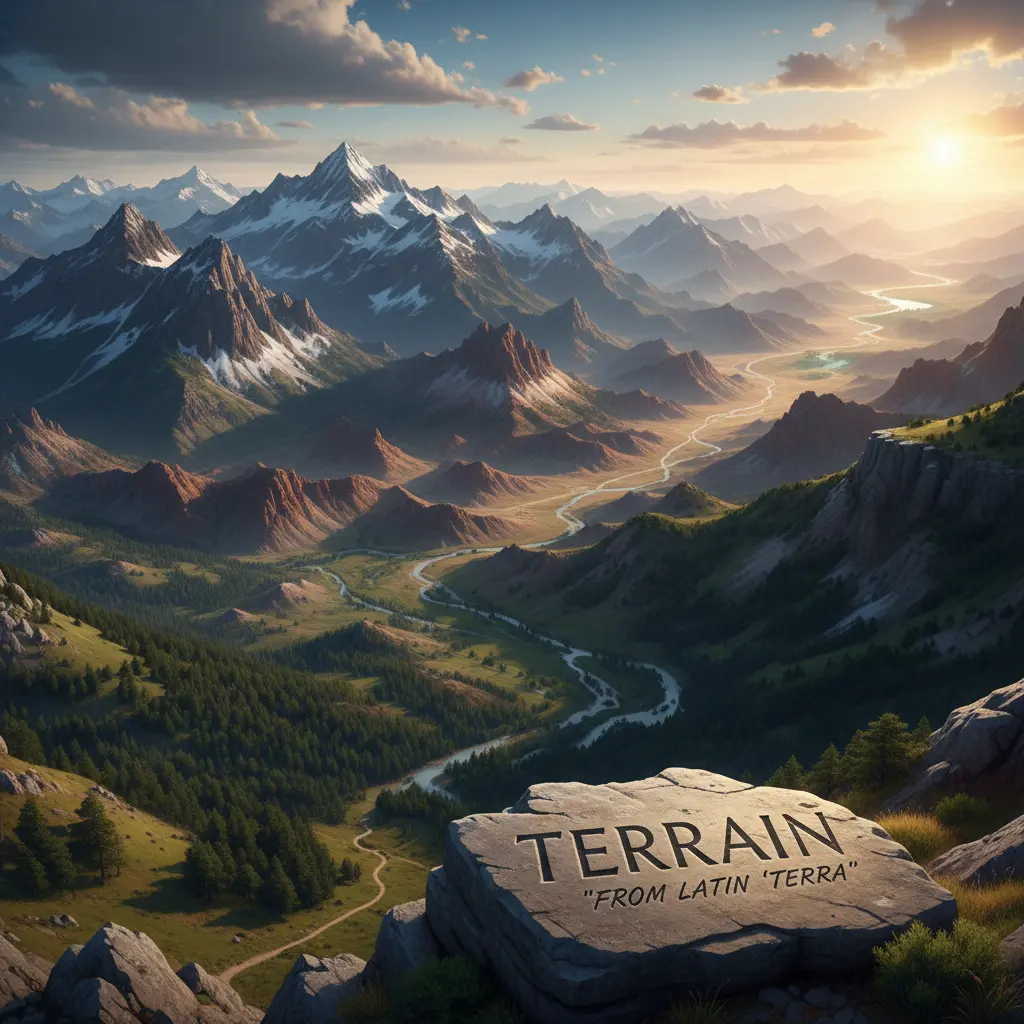
The word 'terrain' comes from the Latin 'terra' meaning 'earth' + the suffix '-ain' indicating a relation. It transitioned through Old French into English. Visualize a large, diverse landscape with mountains and valleys that showcase the rich features of earth, making it memorable as you explore new terrains.
Note 1: These definitions and etymologies are not standard dictionary definitions, but extended explanations provided to help with memorization and understanding of the actual application of words. Through this background information, we strive to make words more vivid and easier to understand, and help you remember their meanings in real life.
Note 2: LexiTalk designs the learning flow around the linguistics principle of “Comprehensible Input.” When learners encounter material that is slightly above their level but still understandable from context, the brain naturally absorbs the language. That’s why we keep every word inside authentic contexts, using examples and associations to help you understand it and use it flexibly.
Read the FAQ explanation of Comprehensible InputI crouch and press my palm to the earth, stepping onto the uneven terrain. I move my weight slowly, shifting my feet as the ground dips and rises. I adjust my stance and keep my eyes on the path as the landscape changes under my steps. With each step the land reveals its feel—the slope, the grip of soil, the open space ahead—without words between us.
Terrain refers to the physical features of a tract of land and plays a central role in travel, geography, and planning. When we talk about the terrain of a region, we describe its topography, including hills, valleys, plains, plateaus, water bodies, and vegetation. In everyday speech, people use terrain to compare landscapes, assess ease of movement, or imagine how a place shapes human activity. The word can also be used in military and tactical contexts, where terrain influences strategies and risk. Include both natural features and man-made alterations to fully convey a landscape's character.
English tends to separate ‘land’ (ownership) from ‘terrain’ (physical surface features and movement). Learners often confuse terrain with landscape or land ownership, and miss that terrain can be used in plural to compare different areas.
What is the meaning of the word 'terrain'?
In which sentence is 'terrain' used correctly?
Which word is an antonym of 'terrain'?
How is the word 'terrain' relevant in a hiking scenario?
Can you think of a situation where understanding 'terrain' would be important?
Download LexiTalk app for personalized learning experience
Download AppCookies
We use cookies for essential site functions, analytics, and ads. You can accept, reject, or manage preferences. Privacy Policy