wildlife - Master This Word
Master this word with our 5-step learning method – Learn English in English
Train English Through Brain Routes, Not Translation.
This page helps you stop memorizing isolated translations and start understanding a word through its shared mental image, native-style thinking, and practical training steps.
Master this word with our 5-step learning method – Learn English in English
Example sentences are the start of understanding. Don't rush to memorize. First feel how the word works in a sentence.
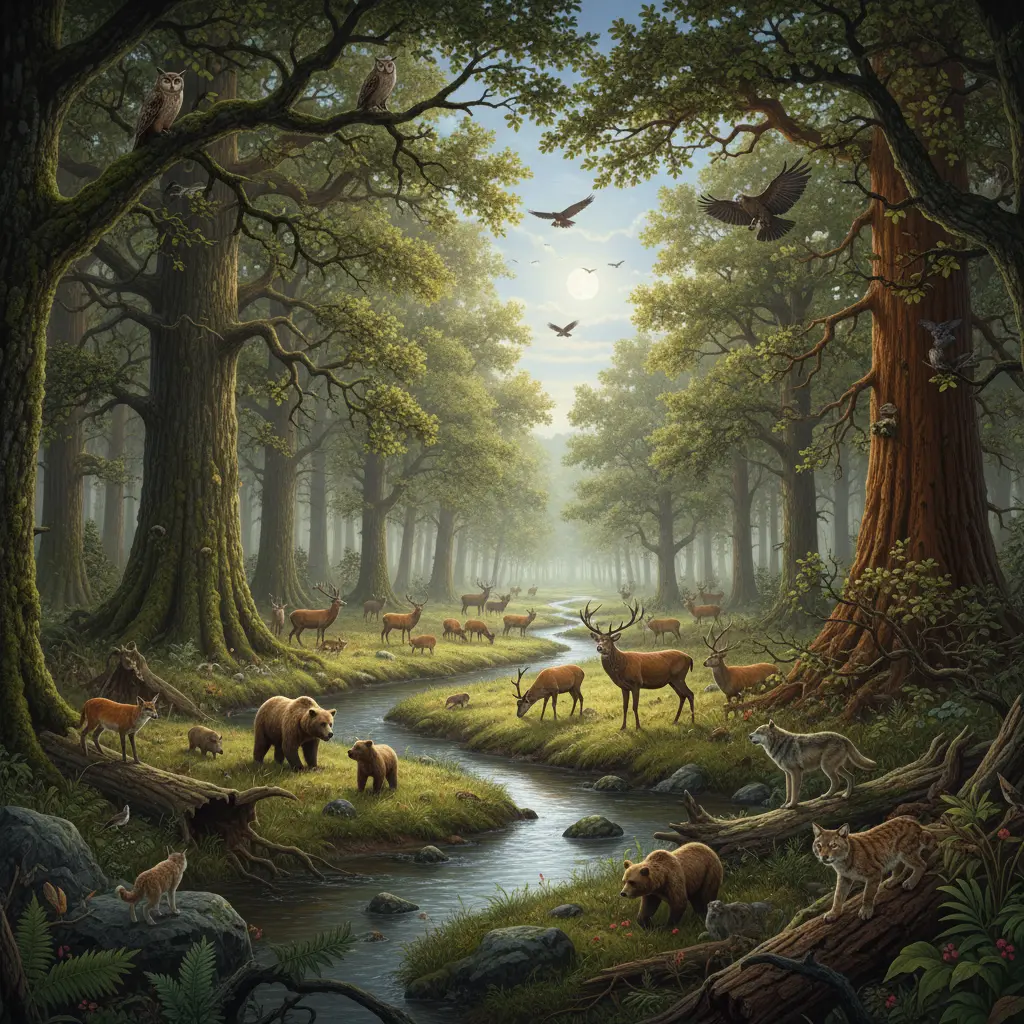
wild (meaning undomesticated) + life (meaning existence), from Old English and Germanic roots. Imagine a vast forest teeming with animals, each living freely without human control, embodying the essence of "wildlife."
Note 1: These definitions and etymologies are not standard dictionary definitions, but extended explanations provided to help with memorization and understanding of the actual application of words. Through this background information, we strive to make words more vivid and easier to understand, and help you remember their meanings in real life.
Note 2: LexiTalk designs the learning flow around the linguistics principle of “Comprehensible Input.” When learners encounter material that is slightly above their level but still understandable from context, the brain naturally absorbs the language. That’s why we keep every word inside authentic contexts, using examples and associations to help you understand it and use it flexibly.
Read the FAQ explanation of Comprehensible InputI step onto a quiet trail and move slowly, feet finding a careful rhythm. I shift my weight when a branch snaps and I pause, listening to the chorus of birds and the rustle of small creatures in the undergrowth. The world changes with my pace as I adjust my gaze, keep my ears open, and let the sounds guide my walk. In that moment wildlife feels like the living chorus around me—the birds, the tiny mammals, and even the plants—sharing this space in a wild, breathing place I’m choosing to notice.
Wildlife refers to animals living in their natural environment, as well as the flora and fauna of a region. It covers wild animals as opposed to domesticated ones, and includes many organisms that exist without human care in forests, oceans, deserts, and wetlands. Understanding wildlife helps learners discuss ecosystems, conservation, biodiversity, and the balance of nature. The word evokes freedom, wildness, and natural processes, and it often appears in talks about protected areas, wildlife corridors, and nature photography. In ordinary usage, wildlife is usually treated as uncountable, e. g., 'the wildlife of this reserve,' though you might refer to 'a variety of wildlife' when speaking of several species.
In English, wildlife is a broad, ecological term referring to living organisms in a region, not just individual animals; learners often equate it with wild animals or think it implies danger.
What is the meaning of the word 'wildlife'?
In which sentence is 'wildlife' used correctly?
Which word is a synonym for 'wildlife'?
Which word is an antonym for 'wildlife'?
How does the concept of 'wildlife' apply in real-life situations?
Download LexiTalk app for personalized learning experience
Download AppCookies
We use cookies for essential site functions, analytics, and ads. You can accept, reject, or manage preferences. Privacy Policy