farmer - Master This Word
Master this word with our 5-step learning method – Learn English in English
Train English Through Brain Routes, Not Translation.
This page helps you stop memorizing isolated translations and start understanding a word through its shared mental image, native-style thinking, and practical training steps.
Master this word with our 5-step learning method – Learn English in English
Example sentences are the start of understanding. Don't rush to memorize. First feel how the word works in a sentence.
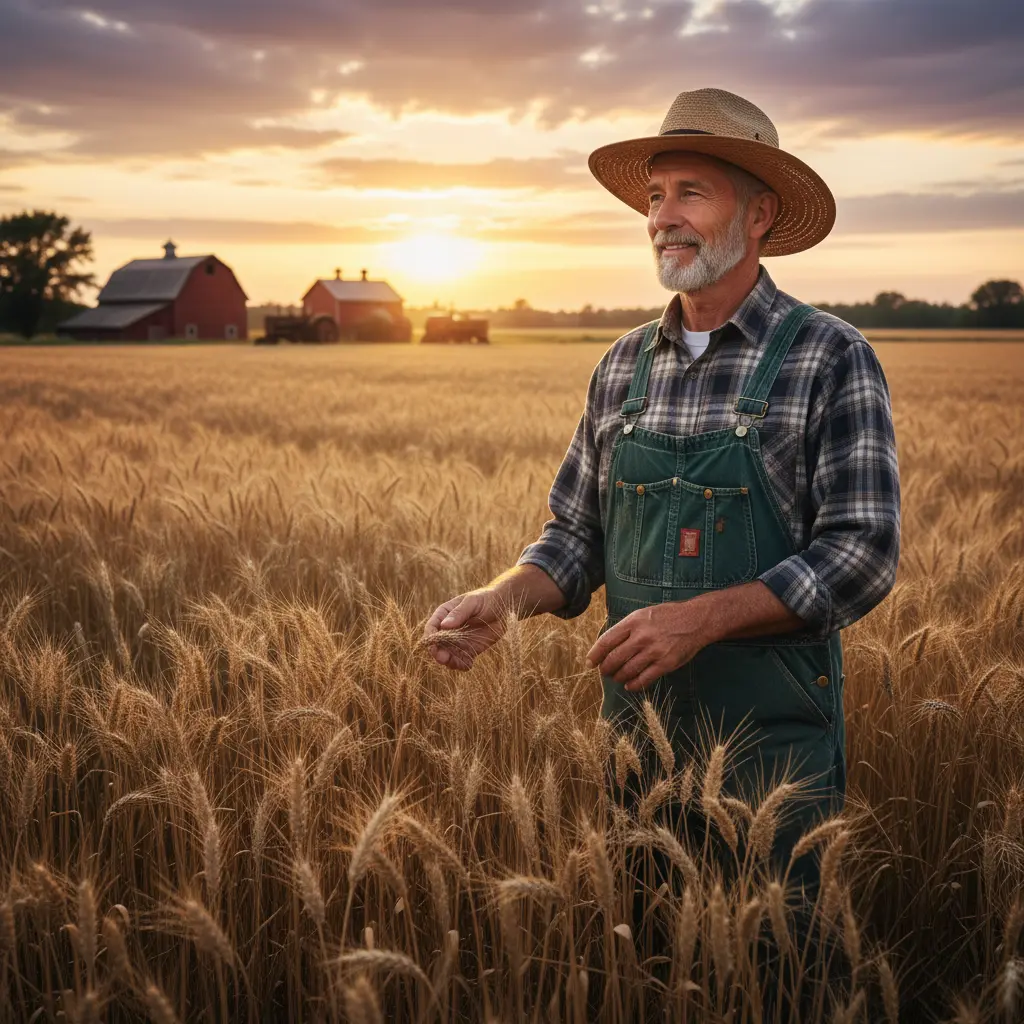
farmer = farm + -er; historical origin: Middle English 'fermer' from Old French 'fermier' from Latin 'firmarius' meaning 'one who collects rents'; memory image: imagine a farmer wearing a straw hat, tending to fields of crops with a peaceful sunset in the background.
Note 1: These definitions and etymologies are not standard dictionary definitions, but extended explanations provided to help with memorization and understanding of the actual application of words. Through this background information, we strive to make words more vivid and easier to understand, and help you remember their meanings in real life.
Note 2: LexiTalk designs the learning flow around the linguistics principle of “Comprehensible Input.” When learners encounter material that is slightly above their level but still understandable from context, the brain naturally absorbs the language. That’s why we keep every word inside authentic contexts, using examples and associations to help you understand it and use it flexibly.
Read the FAQ explanation of Comprehensible InputI bend, lift a bucket, and push my feet toward the yard. I move along the fence line, feel the weight pull at my arms, and set the bucket down by the trough. I adjust my stance, shift my balance, and keep going as the sun climbs. The rhythm of the day speaks softly of farming life, and I sense what the farmer does, one careful action at a time.
Farmer is a noun for a person who grows crops or raises animals for food. It also refers to someone who owns or operates a farm, regardless of the farm size, from a small family plot to a large estate. In everyday English, farmer often appears with farm or farming in phrases such as a farmer on a dairy farm or farming communities. The term can be neutral, yet it may evoke rural or traditional imagery in some contexts. Learners should distinguish farmer from farmhand (a worker on a farm) and from farming (the activity). Plural is farmers; possessive is farmer's.
Farmer emphasizes a person who works the land; English separates place (farm) and activity (farming). Learners often confuse farm with farmer or think farming is a person.
What is the meaning of the word 'farmer'?
In which of the following sentences is 'farmer' used correctly?
Which of the following is a similar word to 'farmer'?
What is the opposite of a 'farmer'?
In what real-life context would you likely encounter a farmer?
English Learning Listening Content
Listen NowDownload LexiTalk app for personalized learning experience
Download AppCookies
We use cookies for essential site functions, analytics, and ads. You can accept, reject, or manage preferences. Privacy Policy