
intoxication - Master This Word
Master this word with our 5-step learning method – Learn English in English
Train English Through Brain Routes, Not Translation.
This page helps you stop memorizing isolated translations and start understanding a word through its shared mental image, native-style thinking, and practical training steps.
Master this word with our 5-step learning method – Learn English in English
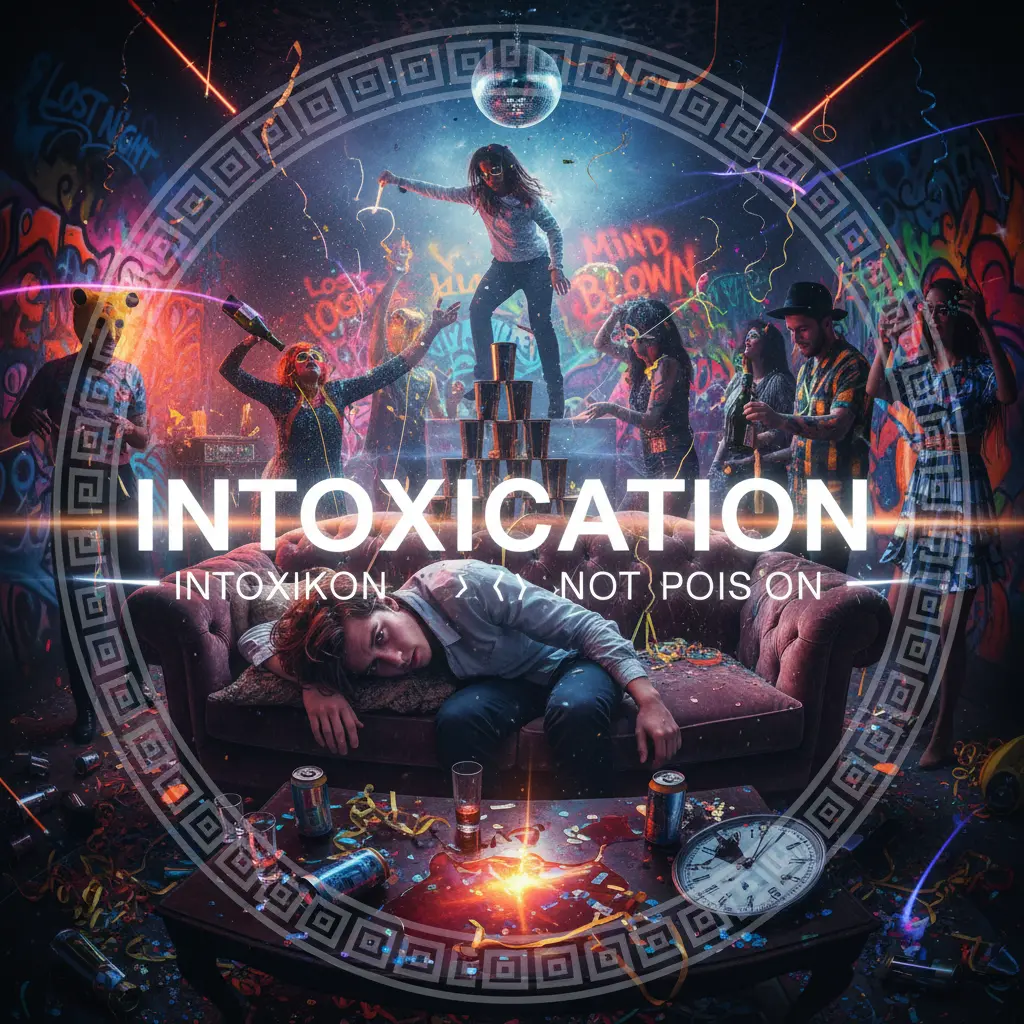
Example sentences are the start of understanding. Don't rush to memorize. First feel how the word works in a sentence.
The word can be divided into the prefix 'in-' meaning 'not' and the root 'toxic', which comes from the Greek 'toxikon' meaning 'poison'. It entered English through Latin 'intoxicatio'. Imagine someone falling asleep due to drinking too much and waking up in a chaotic party, a visual of overwhelming experiences.
Note 1: These definitions and etymologies are not standard dictionary definitions, but extended explanations provided to help with memorization and understanding of the actual application of words. Through this background information, we strive to make words more vivid and easier to understand, and help you remember their meanings in real life.
Note 2: LexiTalk designs the learning flow around the linguistics principle of “Comprehensible Input.” When learners encounter material that is slightly above their level but still understandable from context, the brain naturally absorbs the language. That’s why we keep every word inside authentic contexts, using examples and associations to help you understand it and use it flexibly.
Read the FAQ explanation of Comprehensible InputIntoxication is a noun with several related meanings. In everyday English it most often means the state of being drunk from alcohol, marked by impaired balance, slowed thinking, and reduced self-control. It can also describe a powerful emotional overwhelm, for example when someone is overwhelmed or carried away by excitement, fear, or love, sometimes called emotional intoxication. A third sense is medical or legal: intoxication can refer to the act or condition of consuming a toxic substance, leading to poisoning or serious harm. In news or academic writing you might discuss drivers who are intoxicated, or the intoxicating effect of a scene or a piece of music, used metaphorically to describe strong influence. Notably, intoxication is distinct from addiction.
In English we can separate intoxication from emotion or poisoning clearly; learners often worry about nonstandard uses or metaphorical phrases. Emphasize collocations and surface forms to avoid misinterpretation in contexts like law or medicine.
What does the word 'intoxication' mean?
Which sentence uses 'intoxication' correctly?
Which word is similar to 'intoxication'?
What is the opposite of 'intoxication'?
Can you think of a real-life context involving the word 'intoxication'?
Download LexiTalk app for personalized learning experience
Download AppCookies
We use cookies for essential site functions, analytics, and ads. You can accept, reject, or manage preferences. Privacy Policy