mechanism - Master This Word
Master this word with our 5-step learning method – Learn English in English
Train English Through Brain Routes, Not Translation.
This page helps you stop memorizing isolated translations and start understanding a word through its shared mental image, native-style thinking, and practical training steps.
Master this word with our 5-step learning method – Learn English in English
Example sentences are the start of understanding. Don't rush to memorize. First feel how the word works in a sentence.
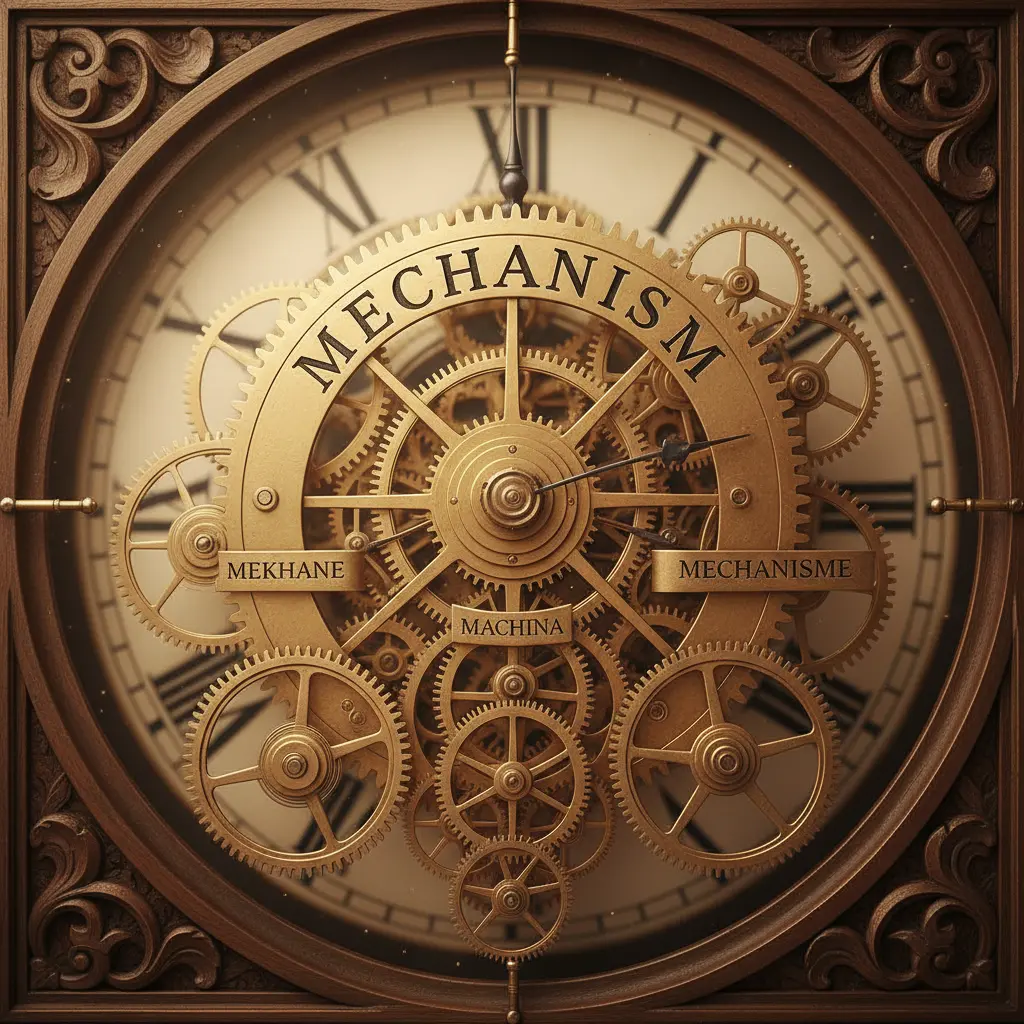
mechanism = mechan- (from 'mekhane' meaning 'machine') + -ism (indicating process or action). Originated from Greek to Late Latin to Middle English. Visualize gears in a clock working together to tell time, symbolizing how parts interact in a mechanism.
Note 1: These definitions and etymologies are not standard dictionary definitions, but extended explanations provided to help with memorization and understanding of the actual application of words. Through this background information, we strive to make words more vivid and easier to understand, and help you remember their meanings in real life.
Note 2: LexiTalk designs the learning flow around the linguistics principle of “Comprehensible Input.” When learners encounter material that is slightly above their level but still understandable from context, the brain naturally absorbs the language. That’s why we keep every word inside authentic contexts, using examples and associations to help you understand it and use it flexibly.
Read the FAQ explanation of Comprehensible InputI grip the door knob and turn it, feeling the metal resist at first. A tiny push and pull follows as the latch shifts. I adjust my grip and keep my eyes on the mechanism until the door gives. In that moment I sense how a plan or device comes alive when a part moves into place.
Mechanism can refer to a physical system of moving parts, such as gears in a clock, designed to produce a specific result. It also means a method or process that achieves a goal, not necessarily a machine. People talk about the social or biological mechanisms that explain why things happen, for example, the mechanism of action of a drug or the mechanism by which incentives change behavior. In daily use, we distinguish between the mechanism of a device (how it works) and the mechanism of a plan or policy (how it leads to outcomes). Understanding the mechanism often requires thinking about inputs, interactions, and outcomes. The word is common in science, engineering, and social studies, and it invites you to map cause and effect.
English tends to treat mechanism as both a concrete device’s inner workings and as an abstract explanatory system; learners often mix it with method or technique, or skip the idea of cause and effect.
What is the meaning of the word 'mechanism'?
Which sentence uses the word 'mechanism' correctly?
Which word is most similar to 'mechanism'?
What is the opposite of 'mechanism'?
Can you give an example of a real-life scenario of 'mechanism'?
Download LexiTalk app for personalized learning experience
Download AppCookies
We use cookies for essential site functions, analytics, and ads. You can accept, reject, or manage preferences. Privacy Policy