minimal - Master This Word
Master this word with our 5-step learning method – Learn English in English
Train English Through Brain Routes, Not Translation.
This page helps you stop memorizing isolated translations and start understanding a word through its shared mental image, native-style thinking, and practical training steps.
Master this word with our 5-step learning method – Learn English in English
Example sentences are the start of understanding. Don't rush to memorize. First feel how the word works in a sentence.
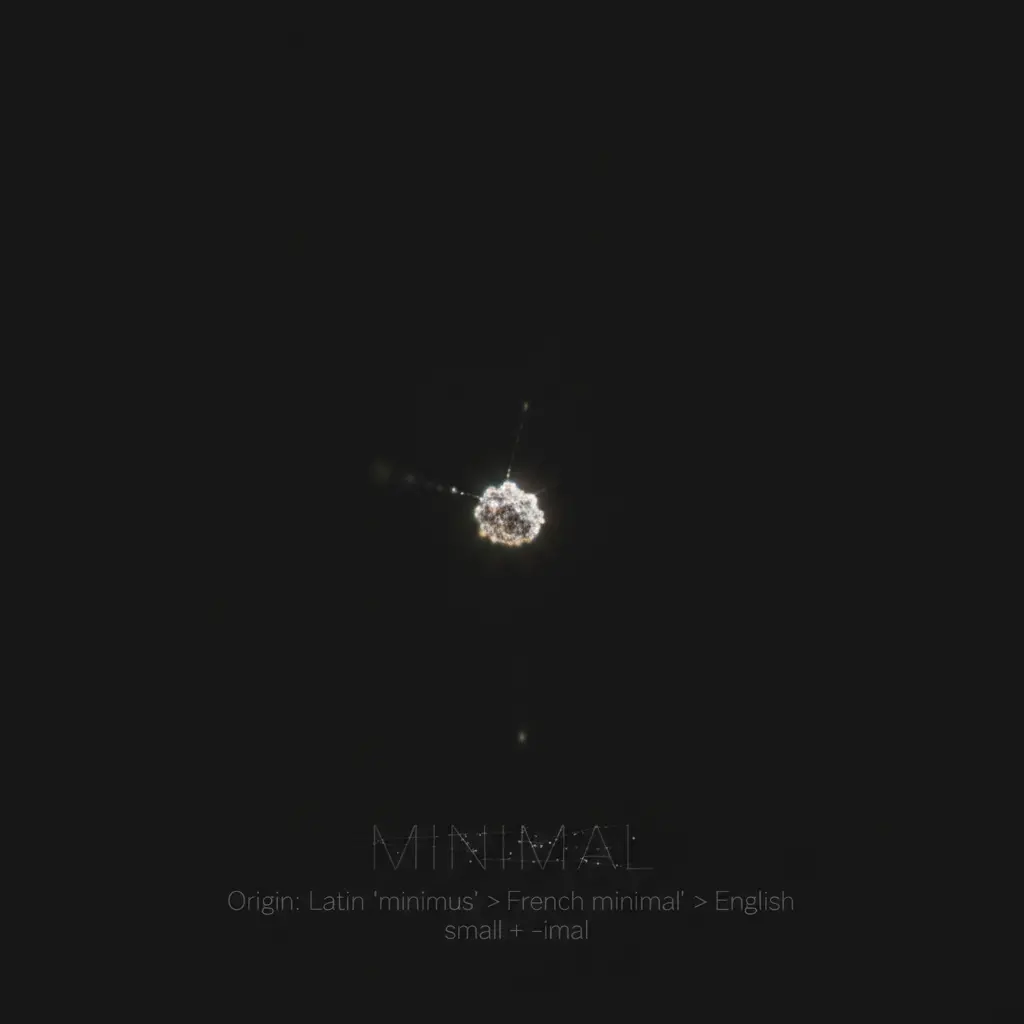
min- = small + -imal = relating to. Origin: Latin 'minimus' → French 'minimal' → English. Imagine a tiny speck of dust, the smallest you can see, representing the concept of 'minimal'.
Note 1: These definitions and etymologies are not standard dictionary definitions, but extended explanations provided to help with memorization and understanding of the actual application of words. Through this background information, we strive to make words more vivid and easier to understand, and help you remember their meanings in real life.
Note 2: LexiTalk designs the learning flow around the linguistics principle of “Comprehensible Input.” When learners encounter material that is slightly above their level but still understandable from context, the brain naturally absorbs the language. That’s why we keep every word inside authentic contexts, using examples and associations to help you understand it and use it flexibly.
Read the FAQ explanation of Comprehensible InputI pick up a crowded collection and move my hands, slowly pulling away what I don't need. I push here, pull there, adjust the shape, and turn a jumble into a neat line. As I decide to keep only the essentials, the space feels lighter and more controlled. What stays seems minimal, and the mind learns to notice the difference between more and enough.
Minimal describes the smallest possible amount, degree, or size of something, and it can also refer to a basic or fundamental level. In everyday use, people talk about minimal changes, minimal costs, or a minimal design, meaning very little, almost nothing extra. The word often sits between the general idea of 'small' and the stronger sense of 'barely enough.' While 'minimum' is a definite lowest limit, 'minimal' emphasizes simplicity, restraint, or essentials, sometimes with a stylistic or ethical preference for sparseness. English speakers may choose 'minimal' to convey elegance or efficiency, or to avoid implying a numerical minimum. Note its adjectival use, which typically precedes the noun.
Minimal often signals restrained elegance or essential simplicity to a learner. Learners should note that minimal is not the same as minimum; minimum is a numeric lower bound, whereas minimal describes how much or how little is needed, sometimes with a stylistic or practical emphasis.
What is the meaning of the word 'minimal'?
In which sentence is 'minimal' used correctly?
Which word is the opposite of 'minimal'?
In what real-life context would you associate the word 'minimal'?
Reflect on why having a minimal lifestyle can be beneficial.
Download LexiTalk app for personalized learning experience
Download AppCookies
We use cookies for essential site functions, analytics, and ads. You can accept, reject, or manage preferences. Privacy Policy